

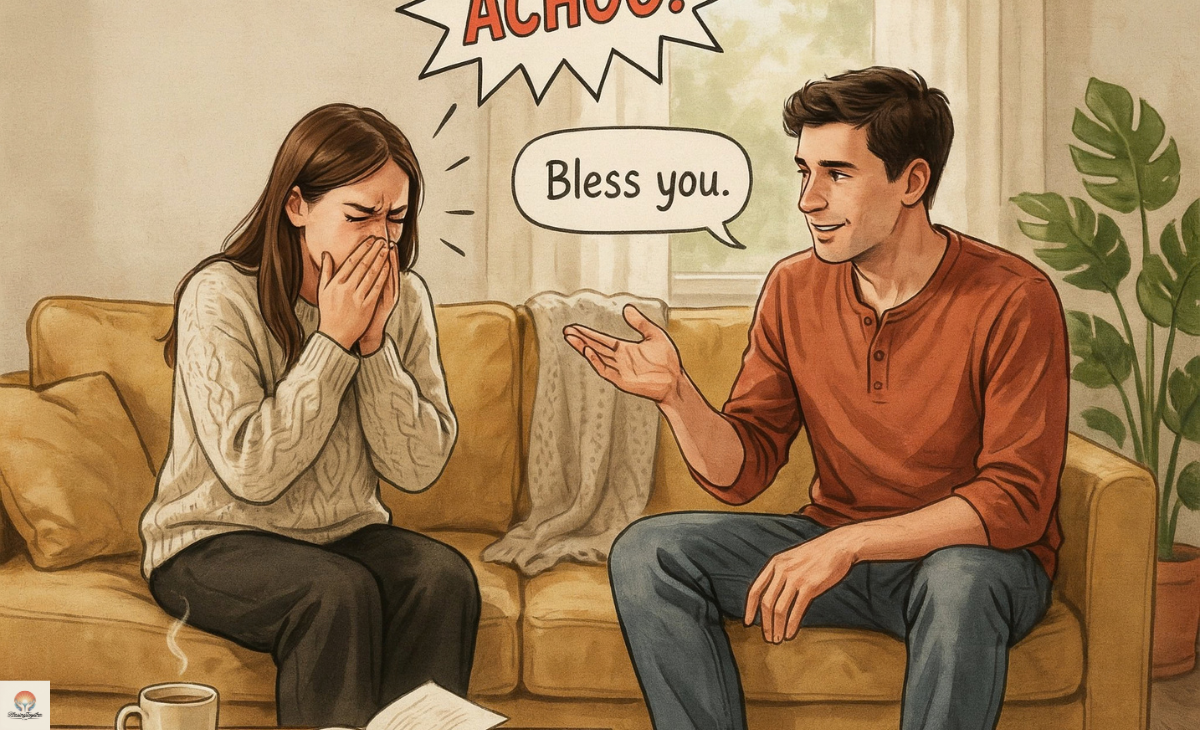
Have you ever wondered why people immediately say “bless you” after hearing a sneeze? This simple phrase has been part of American culture for generations and remains one of the most recognizable examples of social etiquette. While many people use it automatically, the tradition has deep roots connected to religion, superstition, and history. Some theories link it to ancient beliefs about evil spirits, while others connect it to the Bubonic Plague and concerns about health and protection. Today, saying “bless you” is widely viewed as a common courtesy that acknowledges another person and helps maintain friendly social interactions in everyday life.
Why Do People Say Bless You When You Sneeze?
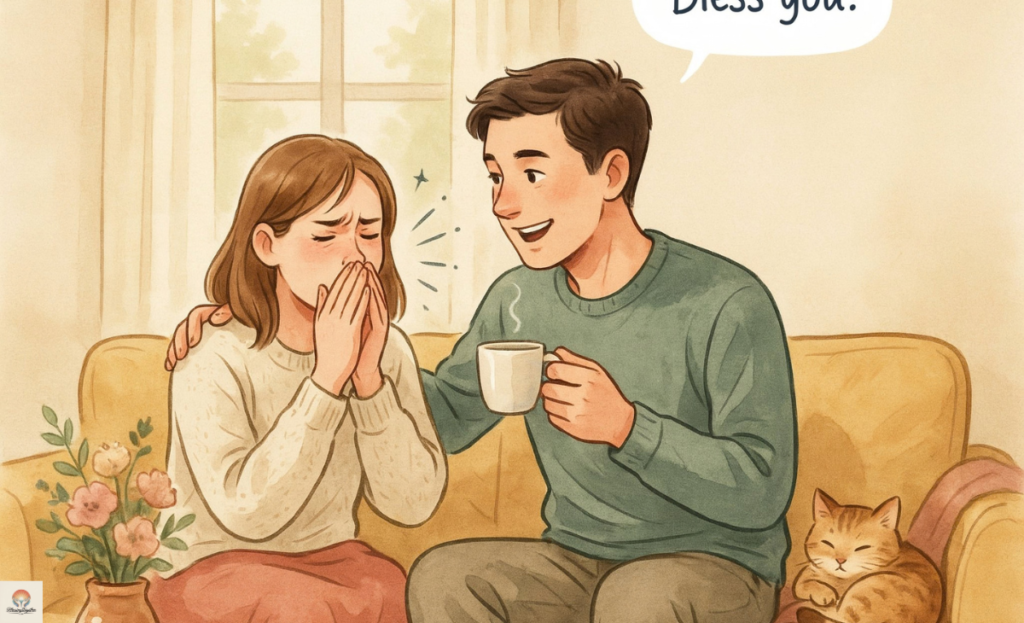
The question “Why do people say bless you when you sneeze?” has many answers because the tradition evolved over time. Some explanations come from religion, while others stem from ancient fears and cultural beliefs. Today, most people view it as a simple polite response, yet earlier generations believed a sneeze carried spiritual significance. Throughout history, sneezing has been connected to everything from health concerns to supernatural forces.
In modern American culture, the phrase functions as part of accepted social etiquette and established social norms. Many people consider it a natural reaction, much like saying “thank you” or holding a door open for someone. The practice has become a familiar post-sneeze tradition that signals awareness and kindness. Even individuals who do not follow religious traditions often continue using the phrase because it remains deeply connected to habit and tradition.
Why the Phrase Became a Social Courtesy

Over generations, repeated behaviors often transform into accepted customs. That is exactly what happened with saying bless you. What may have started as a religious blessing gradually evolved into a form of everyday politeness. As communities developed shared expectations, the phrase became part of accepted etiquette rules and public behavior.
According to Maralee McKee, founder of the Etiquette School of America, many social customs survive because they create comfort and familiarity. In modern society, responding to a sneeze is often viewed as good manners rather than a spiritual act. This connection to sneeze etiquette helps explain why many people feel uncomfortable when nobody responds after a sneeze. The phrase continues because it fulfills an important role in maintaining positive social relationships.
Where Did the Tradition Come From?
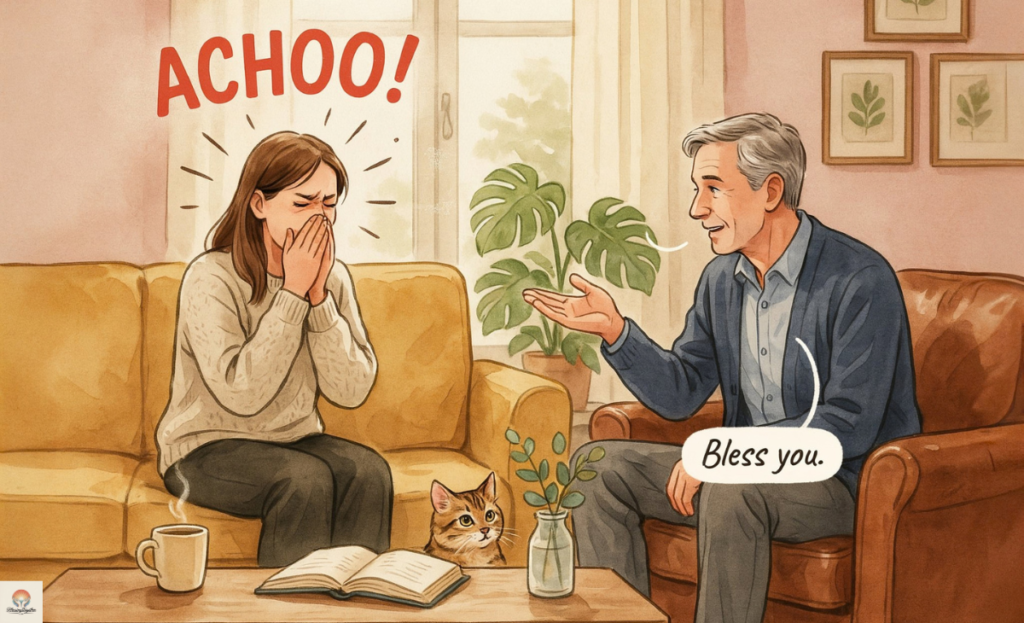
Exploring the origin of saying bless you requires traveling back thousands of years. Long before modern medicine existed, people often interpreted bodily events through spiritual or supernatural beliefs. Sneezing seemed mysterious because it happened suddenly and without warning. Many ancient societies developed explanations based on their understanding of the world, creating numerous historical theories about sneezing.
Throughout history, different civilizations linked sneezing to health, fate, and spirituality. Some believed sneezes predicted future events. Others viewed them as signs from divine powers. These beliefs eventually contributed to the development of various sneezing customs that spread across regions and generations. Although science now explains why people sneeze, remnants of those early traditions remain embedded within modern culture.
Ancient Beliefs About Sneezing and the Soul
Among the most famous explanations is the belief that a sneeze involved the spirit leaving the body. Certain ancient cultures believed that sneezing briefly separated the soul from physical protection. During this vulnerable moment, harmful forces or evil spirits could potentially enter the body. Offering a traditional blessing was thought to provide spiritual safety and protection.
These ideas became particularly influential during the Middle Ages, when many people relied on folklore to understand illness and unusual physical experiences. Within these medieval beliefs, sneezing often carried symbolic meaning. The practice of offering blessings developed partly from the desire to protect loved ones from unseen dangers. Although modern science rejects these explanations, the stories remain a fascinating part of the history of God bless you.
The Religious Origins of Saying “God Bless You”
Religion played a significant role in shaping many everyday customs, including the practice of saying God bless you. Throughout history, religious communities viewed blessings as requests for divine care and guidance. When someone sneezed, offering a blessing reflected concern for their safety and well-being. This spiritual foundation contributed greatly to the phrase’s long-term survival.
The religious origins of bless you remain visible even today. Although many people now use the expression casually, the phrase still contains religious language. Understanding the God bless you meaning helps explain why the custom spread so widely across different societies. It combined practical concern, spiritual belief, and social connection into a simple expression that could be understood by everyone.
The Role of Christianity in Popularizing the Expression
As Christianity expanded throughout Europe, blessings became an important part of daily life. Christians often invoked God’s protection during moments of uncertainty, illness, or danger. A sneeze, especially during times of widespread disease, naturally became one of those moments. Offering God bless you was seen as an act of compassion and faith.
Over time, Christian influence helped transform the phrase into a widespread customary response. Churches reinforced the importance of caring for others, while families passed the tradition from generation to generation. These religious roots explain why many people still associate sneezing with blessings, even if they no longer connect the phrase directly to faith.
How Did “Bless You” Become Part of Modern Etiquette?
As societies evolved, many ancient customs lost their original meanings yet remained firmly rooted in daily life. The phrase “Bless you” followed a similar path. What began as a response connected to historical theories, religion, and disease gradually transformed into a standard rule of social etiquette. Today, most people in the United States do not think about the historical origins of the phrase when they say it. Instead, it functions as a familiar social habit that helps maintain positive interactions.
Modern sneeze etiquette reflects the way communities create shared expectations over time. Just as people say “excuse me” after bumping into someone, many feel naturally inclined to offer a polite response after hearing a sneeze. This behavior has become part of accepted public manners, reinforcing values such as respect, attentiveness, and kindness. Even individuals who have never studied the origin of bless you often continue the tradition because it feels socially appropriate and culturally familiar.
Interestingly, etiquette specialists frequently point out that customs endure because they serve practical social purposes. The phrase remains relevant because it fulfills an unwritten rule of interaction. Similar to greeting someone or expressing gratitude, saying bless you has become one of many automatic behaviors that support everyday social harmony. Its continued popularity demonstrates how traditions can survive long after their original purpose fades.
Why Do People Feel Awkward When No One Says “Bless You”?
Human beings naturally seek acknowledgment from those around them. This explains why many people notice when no one responds after a sneeze. Although a sneeze lasts only a moment, the silence that follows can feel surprisingly noticeable. The phenomenon has fascinated social observers, including Maralee McKee, who has discussed how customs become part of expected behavior within communities.
Psychologists often explain these reactions through the lens of social norms. When people grow up surrounded by certain customs, those behaviors become expected. In communities where Bless you etiquette in America is common, the absence of the phrase may feel unusual because it violates familiar expectations. This is similar to someone failing to return a greeting or ignoring a thank-you.
The awkwardness also stems from the unique role sneezing plays in bodily functions etiquette. Most bodily functions receive little acknowledgment in public settings. Sneezing stands out as a rare exception. As a result, many people instinctively expect some form of acknowledgment after sneezing. This expectation demonstrates how deeply embedded the custom has become within modern culture.
How Do People React to Sneezes Around the World?
Although Americans commonly use “Bless you”, responses to sneezing vary widely across the globe. Exploring Sneezing traditions around the world reveals fascinating differences in language, culture, and social expectations. Some societies offer blessings, others wish good health, and a few prefer complete silence. These variations demonstrate how local customs shape everyday behavior.
Across continents, sneezing has inspired a remarkable variety of expressions. While the underlying goal often remains similar—showing concern or goodwill—the words and traditions differ significantly. Examining What do different countries say after sneezing helps reveal how diverse societies interpret a simple human reflex. From Europe to Asia, sneezing continues to inspire unique forms of social interaction.
The differences also highlight the influence of cultural traditions and long-standing cultural beliefs. Some responses originated from health concerns. Others emerged from religious practices or linguistic habits. Despite these variations, most cultures use sneezing as an opportunity to express friendliness and respect.
The following table provides a quick overview of common responses around the world:
| Country/Region | Common Response | Meaning |
| Germany | Gesundheit | Health |
| Spain & Latin America | Salud | Health |
| Portugal & Brazil | Saúde | Health |
| Turkey | Live long and prosper (similar wish) | Longevity and wellness |
| Japan | Often no response | Silence is common |
| United States | Bless you or God bless you | Blessing and goodwill |
Germany and the Use of “Gesundheit”
In Germany, the most common sneeze response is Gesundheit, a word that literally means “health.” Unlike God bless you, the expression focuses directly on physical well-being rather than spiritual protection. Over time, the phrase became popular in American communities due to immigration and cultural exchange.
Spanish-Speaking Countries and “Salud”
Throughout Spain and much of Latin America, the preferred response is Salud, which translates directly to “health.” The phrase reflects a wish for wellness and good fortune. Similar expressions exist across many cultures where health has historically been viewed as one of life’s greatest blessings.
The use of Salud demonstrates how different societies prioritize well-being in their sneezing customs. Rather than invoking a religious blessing, the expression focuses on the practical hope that the person remains healthy. This connection to wellness helps explain the enduring popularity of the phrase.
Responses to Sneezing in Turkey, Japan, and Other Cultures
Moving beyond Europe reveals even more interesting examples of international etiquette. In Turkey, people may respond with phrases that resemble wishes for a long and healthy life. The sentiment is often summarized as Live long and prosper, emphasizing wellness, longevity, and happiness.
Meanwhile, Japanese sneezing customs differ considerably from those found in many Western countries. In Japan, silence is often considered perfectly acceptable. Most people do not feel obligated to offer a verbal response after a sneeze. This contrast highlights how cultural expectations shape everyday interactions.
The absence of a response in Japan often surprises visitors from the United States, where social customs after sneezing encourage verbal acknowledgment. Yet within Japanese society, silence does not signal rudeness. Instead, it reflects a different set of social expectations and communication norms.
Examining these customs helps answer the question, What do different countries say after sneezing? The answer varies widely. Some cultures emphasize blessings, others focus on health, and some choose silence. Together, these traditions reveal the remarkable diversity of human behavior surrounding one simple act: a sneeze.
Fun Facts About Sneezing You Probably Didn’t Know
Sneezing may seem ordinary, yet it is one of the body’s most fascinating reflexes. A sneeze occurs when your nose detects irritation from dust, pollen, strong smells, or other particles. The body responds by forcefully expelling air through the nose and mouth. This process helps protect the respiratory system from potentially harmful substances.
One popular myth claims that your heart stops during a sneeze. However, medical experts, including specialists from the Cleveland Clinic, have repeatedly explained that this is not true. While sneezing can briefly alter heart rhythm, the heart does not actually stop. This fact often surprises people who grew up hearing the myth.
Another interesting detail is the speed of a sneeze. Depending on the individual and circumstances, a sneeze can propel droplets at remarkable speeds. This powerful reaction explains why covering your mouth and nose remains an important part of modern sneeze etiquette and public health practices.
Scientists also continue to study unusual sneezing triggers. Some people sneeze when exposed to bright sunlight, a phenomenon known as the photic sneeze reflex. Others may sneeze after eating large meals or experiencing sudden temperature changes. These surprising facts show that sneezing remains a complex and fascinating bodily function.
Quick Sneezing Facts
| Fact | Explanation |
| Your eyes usually close | A natural reflex during sneezing |
| The heart doesn’t stop | A common myth |
| Sneezes help protect the body | They remove irritants |
| Light can trigger sneezes | Known as the photic sneeze reflex |
| Everyone sneezes differently | Frequency varies by person |
FAQs
Why do we say “bless you” when someone sneezes?
The tradition likely comes from old beliefs about health, spirits, and protection from illness.
Today, it is mostly a polite social custom and a way to acknowledge someone’s sneeze.
What does 7 sneezes in a row mean?
There is no proven medical or spiritual meaning behind seven sneezes in a row.
Repeated sneezing is usually caused by allergies, irritation, or a temporary reaction.
Is it rude to not bless someone after sneezing?
In some cultures, people expect a response, so silence may seem impolite.
However, many people do not consider it rude, especially where the custom is less common.
Why do we say Achoo?
“Achoo” is an onomatopoeic word that imitates the sound many people make when sneezing.
Different languages use different words to represent the sound of a sneeze.
Is saying God bless a sin?
No, saying “God bless you” is generally not considered a sin in Christianity.
It is commonly used as a kind expression of goodwill, prayer, or encouragement.
Conclusion
The story behind Why do people say bless you when you sneeze reveals far more than a simple social habit. The tradition combines ancient fears, religious teachings, disease outbreaks, and evolving customs into a practice that has survived for centuries. From concerns about evil spirits and the spirit leaving the body to prayers for health and protection during the Bubonic Plague, the phrase carries a rich historical legacy.
The next time you hear a sneeze and instinctively respond, remember that you are participating in a custom shaped by centuries of history. Few everyday phrases carry such a remarkable blend of religion, culture, science, and human connection. That enduring combination explains Why do Americans say bless you, why the custom persists across generations, and why this simple expression remains one of the world’s most recognizable examples of habit and tradition.

Hi, I’m Sidra Ali, a content writer behind Blessings Together. I love creating engaging and thoughtful content that brings positivity, inspiration, blessings and valuable insights to my readers.